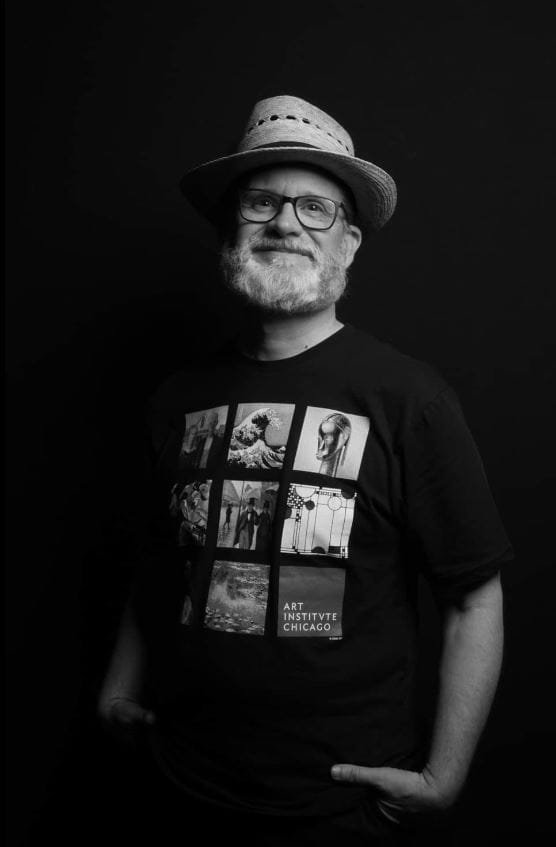
The city’s 2026-27 budget, which nearly decimated San Diego arts funding, was a low point for San Diego arts advocates like Shaun Cassidy.
“It was a profound mistake,” said Cassidy, who serves as a strategic advisor to multiple Southern California arts organizations.
That notwithstanding, he’s an optimist who likes to solve problems more than complain about them, and is bullish about the future. “Right now, culturally and in the arts, San Diego is in a major transition.” It hasn’t emerged but it’s emerging. A master plan has been developed. Transformation, especially downtown, has already begun and will come to fruition over the next decade, he said.
San Diego Arts District
The plan includes an Art + Design District that would spearhead the redevelopment of downtown. The heart of the district will be concentrated along the B and C Street corridors, connected by a walkable path between the Spreckels Theatre and the Civic Theatre/City Hall complex.
This San Diego arts project is being led by Jonathon Glus, recently appointed as a Conrad Prebys Senior Art & Design Fellow in Residence. Glus, who previously ran the city’s Department of Cultural Affairs, will work closely with county arts administrator Christine Jones. Cassidy said the Prebys Foundation has already begun purchasing downtown real estate that could be converted to galleries and artist studios.
He cited a revamped film commission and a planned movie studio as examples of the region’s cultural and creative development. In June, the San Diego County Board of Supervisors allocated $500,000 for a new film commission and earlier this month voted to create a nonprofit to administer it. A Hollywood-type movie studio is being planned for Chula Vista, a project on which Cassidy served as a strategic advisor. (Read about movies filmed in San Diego)
Backstory
Originally from Illinois, Cassidy’s journey to becoming an artist and arts advocate started with a full-ride scholarship at the prestigious School of the Art Institute of Chicago—but then took a detour of sorts when, after graduating, he joined the military. He saw this as a way to help out his family with money and see the world. His mother did not have it easy, especially after Cassidy’s father died in a car accident when he was only four. “I started paying bills when I was about 14 or 15 years old. So, after I put myself through college, I decided to go in the military to help the family,” he said.
He’d spend six years in the military, a good chunk working for the Pentagon, handling Air Force Freedom of Information Act, or FOIA, requests, including decisions about releasing or redacting information. He transitioned out of the service and returned to Illinois, which was having one of its quintessentially cold winters. Cassidy, who was in Kuwait during the First Gulf War, had grown accustomed to warm climates.
And so he left for Texas – this was in the mid-90s, at the height of the internet boom – where he became one of Travelocity’s initial employees. “When the buyout hit, I was able to take the buyout,” he said. How he chose to spend his newfound wealth is telling. “I got my mom out of the inner city, got her a house in the suburbs, and put my sister through college,” he told me. And then what? “Then, I just began to focus on helping people.” In particular, investing in and advocating for artists and organizations that aspired to be part of the creative economy. “I became known as an advocacy person, a person that would be a strategy person for people.” He formalized his work under Cassidy Creative Solutions, and 15 years ago moved out to San Diego, where he quickly became known as a rare artist who also spoke the language of business and marketing.
San Diego Arts Organization: Vanguard Culture
A pivotal moment in his journey was when, still relatively new to San Diego, he met Susanna Paredo Swap. He explained, “She had an idea to make a creative nonprofit here in San Diego. And I became her advisor to develop that nonprofit,” which ultimately became Vanguard Culture. Cassidy, who currently chairs its board of directors, noted that the organization has been honored by the county and is highly regarded in the San Diego arts community. “We’re probably one of the most influential arts non-profits in the city now,” he said.
Cassidy sees a silver lining in the city’s near-elimination of arts funding. It was a wakeup call for organizations to become less financially dependent on local government. “If you have that dependency, then you will always be in that dependent mode,” he said. Breaking the dependence cycle means arts organizations must develop additional revenue streams to keep San Diego arts programs afloat, especially during lean economic times. “There has to be innovation,” said Cassidy, citing Vanguard Culture’s San Diego Art Pass, which brings together 55 arts nonprofits and shares proceeds from sales with the participating organizations.
What’s in store for the next ten or 15 years? He said he expects to focus more on advocacy and making art, while doing less business work. Much of Cassidy’s artwork is composed of large paintings and prints that explore Celtic and Native American themes (His father was Irish, his mother Cherokee).
One thing he won’t do is “dwell in the world of negativity,” he said, emphasizing that he’s “a person that deals with opportunity.”
Editor’s Note: Check out Shaun Cassidy’s paintings on Instagram @TheCreativeRatio and follow him @CassidyCreative.
Want more San Diego arts stories? Read “San Diego photographer turns images into public art” or “I tracked down this San Diego pro surfer 47 years later. Not what I expected.”


Leave a Reply