When we meet via Zoom, John Mireles is in a somber mood, having just lost his friend Douglas McCullough, the director of Riverside’s UCR ARTS and a significant figure in the photography world.
Mireles describes himself as a contemporary art photographer, and he was most recently designated as the city of San Diego’s Exposure Photo Fellow for 2023-2024. McCullough, he tells me, was both his mentor and artistic collaborator, and represented what he believes is missing in San Diego: An art ecosystem that includes thriving galleries devoted to contemporary art, a community of artists that support and mentor younger artists, art critics, and people passionate about buying and collecting art.
Other cities have that ecosystem, the 59-year-old contends, but not San Diego.

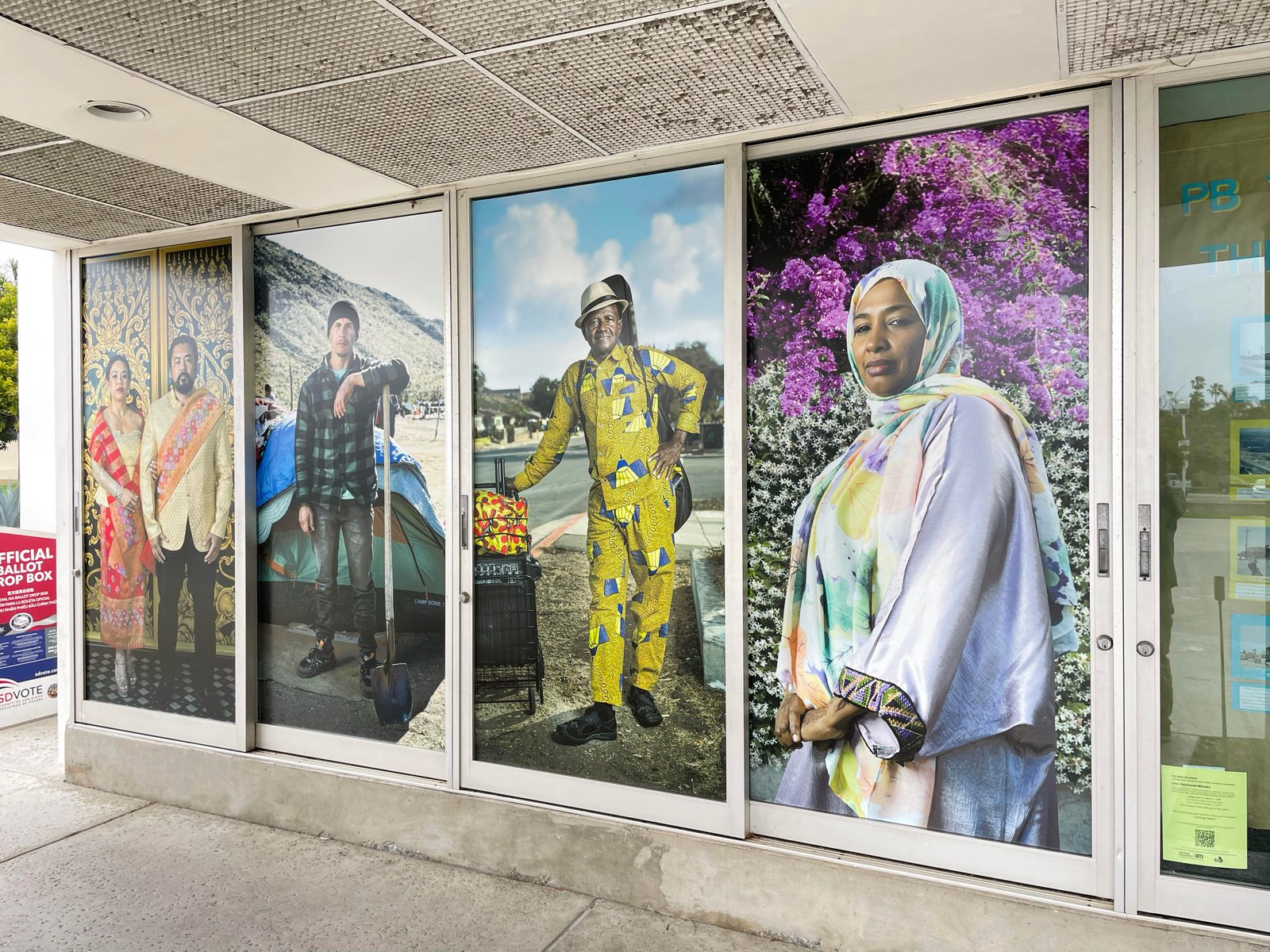
On the bright side, San Diego does have Mireles and he’s doing important work. Funded in part by the National Endowment for the Arts, his fellowship was provided under the auspices of the Department of Cultural Affairs and culminated with his project, The New Colossus: A Photographic Celebration of San Diego’s Immigrant Communities, showcasing portraits of local immigrants, 11 installations in all. Mireles’ photographic artwork is now a part of the City’s Civic Art Collection which can be viewed in-person at the Civic Center.
Mireles emphasizes the importance of community engagement through public art and the validation it brings to represented individuals. This is something he has firsthand experience with. In 2015, he turned his attention to the people, the locals that live in and embody the community, for his subject matter. A Logan Heights resident, he engaged with and got to know his neighbors, and then respectfully and authentically documented their existence, their humanity, with simple, powerful imagery.
This became the Neighbors project, a large, outdoor public exhibition of extra-large, vinyl-printed portraits of community members from neighborhoods south of I-8.
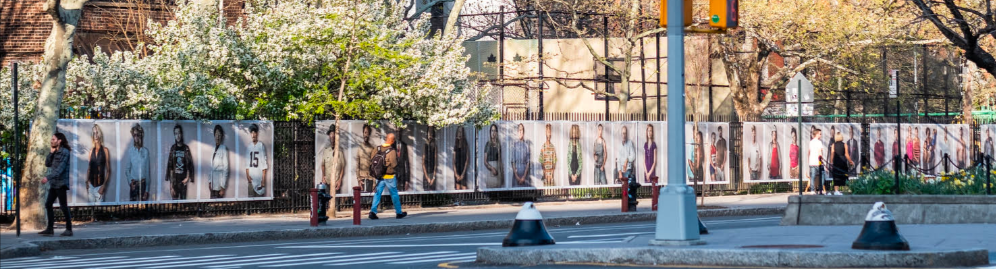
Mireles expanded the project to include portraits of everyday people from all 50 states.
Origin story
Mireles’ journey was anything but linear. It started with a passion for climbing mountains, something the UC Santa Barbara grad did competitively. “I was sponsored and competed in national competitions and did quite well,” he says. He also started experimenting with photography, shooting unique perspectives of the mountains and natural world, work that started to get noticed.
He moved to San Diego in the early ‘90s and transitioned to commercial photography until the dot-com bust in 2000, at which point he starting doing weddings and family portraits until the economy nosedived again in 2008.
Throughout the ups and downs – and there’s been plenty of both – Mireles has managed to stay in the game and eke out a living doing something that he feels passionate about. Part of his success, it seems, is due to his ability to adapt to change and grow as a photographer and artist.
The Final Frontier
After the economy tanked in 2008, he would spend the next years reinventing himself again, this time as a contemporary art photographer, which he describes as “the final frontier” in his photographic journey. He knew instinctively it was where he needed to go, but he had no road map and “no understanding of what it meant to be a contemporary art photographer.”
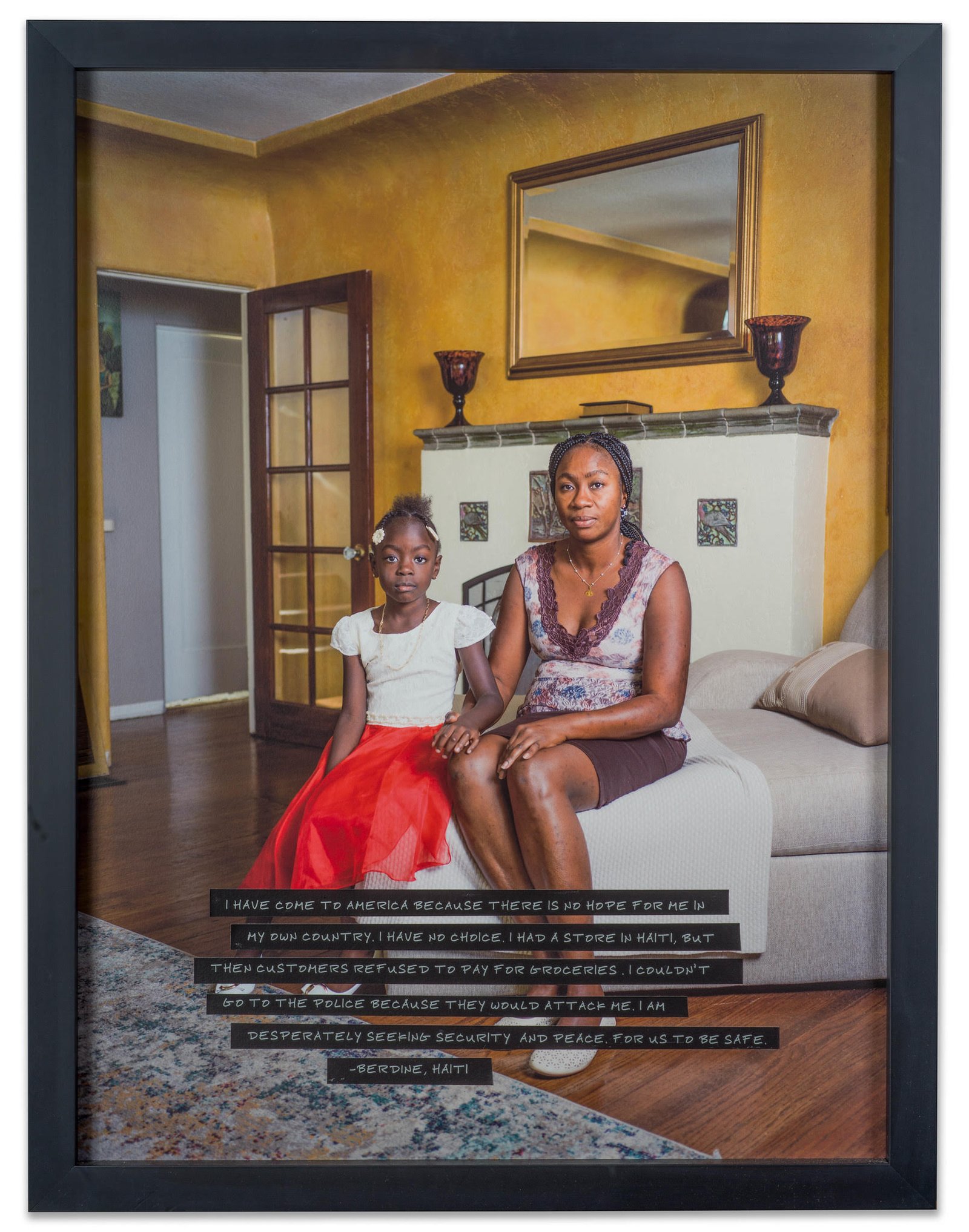
A self-trained artist, it took Mireles a long time – and a lot of self-education – to really understand how things work inside this closed and competitive world.
As he would learn, a contemporary art photographer creates image-based installations for high-end galleries and museums that tend to be experimental, culturally relevant, and designed to communicate a message or provoke a reaction from the audience.
Mireles explains that having a portfolio in the contemporary art world is not enough; you also have to have a pedigree and reputation that “is born of your work, of the accolades you receive, of where you’ve shown your work, of who’s collected your work,” he says, adding that “there’s a language—a verbal and visual language—that’s spoken within the world of contemporary art, and if you don’t speak that language, you’re an outsider.”
Is San Diego a top art city?
“There are many artists here, and there’s many good artists,” he emphasizes. But as much as he loves his adopted home of San Diego and respects many local artists, he insists San Diego lacks the basic ingredients needed to create an arts ecosystem – namely, thriving contemporary art galleries, art critics, media that give coverage to contemporary art, and a community of collectors and buyers.
“We have art here in San Diego but we have very little contemporary art. And as far as galleries that will show this kind of work, we have maybe two or three in all of San Diego,” he says. “There are some smaller art galleries and they show nice work, but it’s not contemporary art, right? It’s not artwork that you can take to New York and show, or that collectors and museums will engage with.”
He attributes this to the San Diego lifestyle and cultural disinterest in art buying, contrasting it with the more vibrant art environments having in cities like Los Angeles and San Francisco.
He points out that one of the costs of not having an art ecosystem is fewer opportunities for young local artists, who essentially have a “path to nowhere.”
“You have to move out of San Diego or at least be visible in other cities and states,” he says.
Escape to New York
And that, for a time, is what Mireles did.
Part of his journey to becoming a credible art photographer meant immersing himself in this world that he didn’t initially understand and in which he felt an outsider. What better way to test your mettle and cure your imposters syndrome by moving to New York, which he did in 2018.
The time he spent in the city was “comparable if not better than getting an art degree,” he says. “I went to the Museum of Modern Art regularly, the Whitney, the Met,” he says enthusiastically. “I’d walk out the door and around the corner were three or four galleries just on my block.”
And while he was in New York, he also managed to hold an exhibition that was featured in the New York Times.
There’s also Los Angeles. Mireles says San Diegans that want to make it in the art world tend to move to L.A, making it harder to build a local, sustainable arts culture.
The “move to L.A.” ritual also applies to bands, I suggest, and Mireles concurs (An example: The Stone Temple Pilots left for L.A. in the early ‘90s but their heart remained in San Diego).
He circles back to the ecosystem, or lack thereof. “We don’t have a thriving art culture here in San Diego for the same reason that a polar bear can’t survive in the desert. It’s not any one thing; it’s the entire ecosystem.”
Mireles’ point was underscored in 2021 when the San Diego Museum of Art featured his solo exhibition, Disestablishment. What he believed was a unique and groundbreaking contemporary art exhibition suffered, he says, from a lack of exposure. And although it was held between outbreaks of Covid, he blames not the pandemic but the lack of an ecosystem.
“It went completely unnoticed,” he says, raising a familiar philosophical conundrum: “If a tree falls in the forest and nobody hears it, did it even happen?”
This was one of the lowest points in Mireles’ artistic journey, causing him to “walk away from art for a few years.” He took off on his motorcycle and just kept going and going, like Forrest Gump on a motorcycle; maybe he’d never come back.
And then last year, he did something he never thought possible: he stopped shooting altogether.
From that low point in his artistic and professional life, Mireles would eventually rebound, like spring flowers emerging from a cold winter. The turning point was the fellowship with the city of San Diego, which gave him income but, more importantly, “it got me back in the gear, got me moving again.” He was working day and night to produce eight separate installations, which would later be exhibited in 11 different locations.
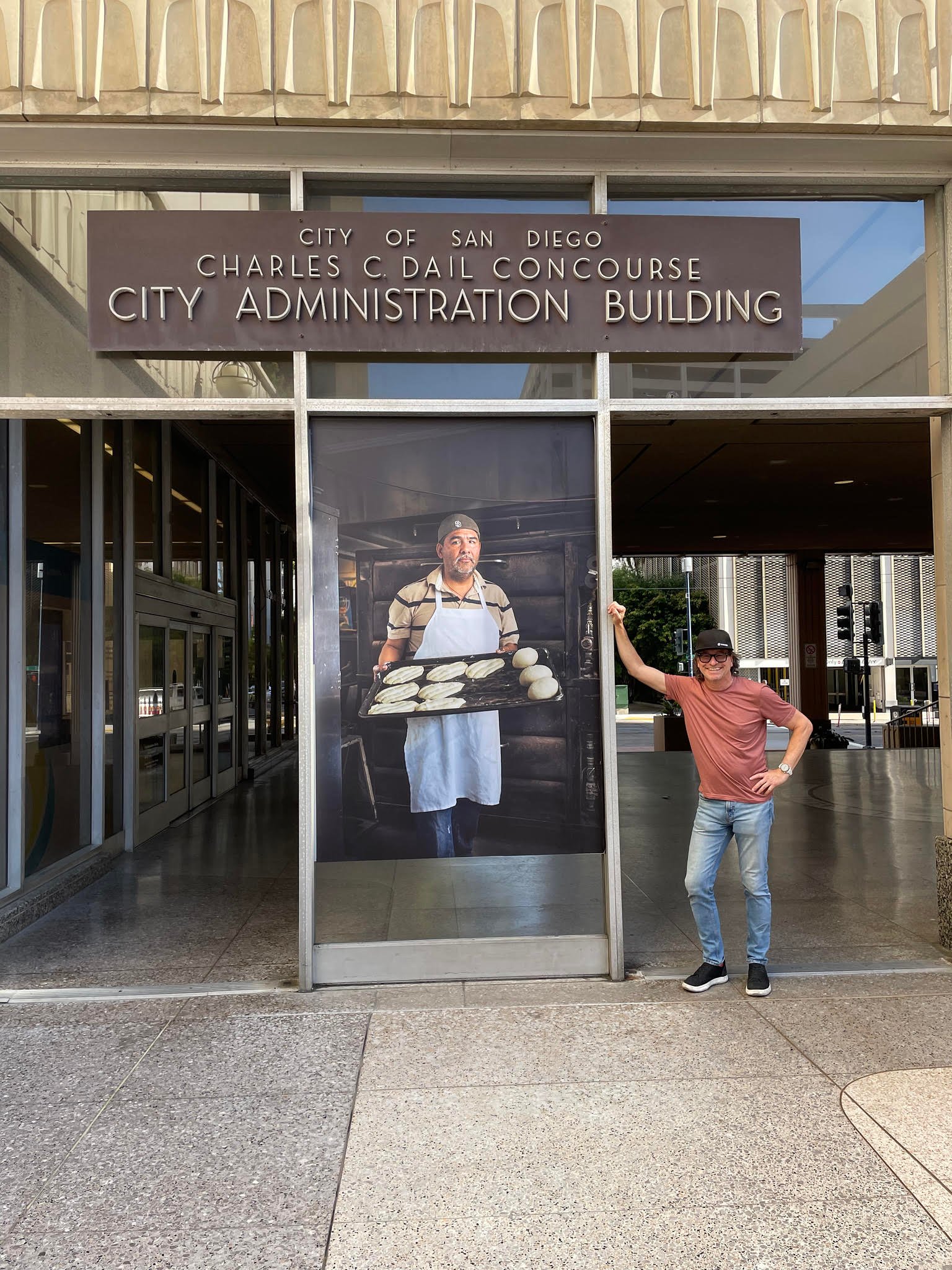
The more he worked, the better he felt. His momentum had returned.
The work ended in October of last year.
“I almost went into a little bit of post-partem depression,” he admits.
But as time passed, the creative impulse returned, as it is wont to do. Suddenly he started thinking, “What about this idea, what about that idea.”
The juices started to flow and next thing he knew, he was in Los Angeles shooting images of homes where he grew up, documenting part of his origin story. And then he found himself in Malibu and Altadena shooting what he describes as “devastated landscapes” for a future exhibit, Black Earth, which will also include images of the 2020 California wildfires and charred landscapes in Arizona and Washington.
In spite of the devastation, the images are startlingly beautiful, he says. And that’s the larger point he’s trying to get across: “Creating beautiful photos of a terrible thing draws people in. I want you to see the beauty and then ask yourself, how can devastation be beautiful?”
Editor’s Note: Follow John on social media @JohnMireles. Check out his work HERE.



Leave a Reply